· Updated
Why Can Eating Disorders Feel Comforting?

When people think about eating disorders, they often imagine someone who desperately wants to get better. But if you have experienced an eating disorder yourself, you may know it's often much more complicated.
Many people describe feeling torn.
Part of them desperately wants freedom from the constant thoughts about food, weight, exercise, and body image. They are exhausted by the anxiety, guilt, secrecy, and the impact on their health and relationships.
But another part of them is frightened by the idea of letting the eating disorder go.
If this sounds familiar, you are not alone.
In fact, one of the most common things I hear from people with eating disorders is:
"I know it's hurting me, but it also feels like it's helping me somehow."
And that makes sense.
Eating Disorders Often Serve a Purpose
Eating disorders rarely appear out of nowhere.
They often develop during periods of stress, uncertainty, emotional pain, life transitions, or overwhelming feelings.
At first, the eating behaviours may seem helpful.
Perhaps restricting food provides a sense of control during a chaotic period of life. Perhaps focusing on calories, exercise, or weight offers a distraction from difficult emotions. Perhaps food rules create a sense of certainty in a world that feels unpredictable.
For some people, the eating disorder becomes a way of coping with:
- Anxiety
- Perfectionism
- Low self-worth
- Difficult emotions
- Loneliness
- Uncertainty
- Stress
This does not mean the eating disorder is actually helping in the long term. But it does help explain why recovery can feel so complicated.
The Eating Disorder Starts Making Promises
Over time, eating disorders often develop a powerful internal voice.
It might say things like:
"You'll feel better if you lose a little more weight."
"You'll feel more confident if you can stick to the rules."
"You'll be safer if you stay in control."
"You'll feel less anxious if you don't eat that."
These thoughts can feel incredibly convincing.
The problem is that eating disorders rarely deliver on these promises. While they may provide temporary relief, they often create:
- Increased anxiety
- Social isolation
- Low mood
- Physical health problems
- Exhaustion
- Greater preoccupation with food and body image
The very thing that once felt comforting can slowly start taking over more and more of a person's life.
Why Recovery Can Feel Scary
If the eating disorder has become a coping strategy, it makes sense that the idea of recovery can feel frightening.
Many people worry:
- What if my anxiety gets worse?
- What if I lose control?
- What if I gain weight?
- What if I don't know how to cope without these behaviours?
These fears are understandable.
- Recovery is not just about changing eating patterns. It is often about learning new ways to manage difficult emotions, uncertainty, stress, and self-criticism.
In many ways, recovery asks people to let go of something that has felt protective, even when it has also been causing harm.
How CBT-E Understands Eating Disorders
One of the evidence-based treatments for eating disorders is CBT-E (Enhanced Cognitive Behavioural Therapy).
Rather than assuming people simply need more motivation or willpower, CBT-E recognises that eating disorders are often maintained by a complex cycle of thoughts, emotions, behaviours, and beliefs.
In CBT-E, we become curious about questions such as:
- What role is the eating disorder playing in your life?
- What does it seem to offer you?
- What keeps the cycle going?
- What are the costs of continuing this way?
- What might life look like without these patterns?
Importantly, CBT-E is not about removing coping strategies before helping someone build new ones. Instead, we work together to understand the eating disorder and gradually develop other ways of managing the challenges it has been helping with.
You Do Not Need to Want Recovery 100% of the Time
One of the biggest myths about treatment is that you need to be completely ready to recover before therapy can help.
Many people begin treatment feeling uncertain. Part of them wants change. Part of them feels terrified of it. Both parts are welcome.
Therapy does not require you to silence your fears or force yourself to feel differently overnight. Instead, it creates space to explore those fears with curiosity and compassion.
A Different Kind of Comfort
The comfort that eating disorders provide is often temporary and comes at a significant cost.
Recovery is not about losing comfort altogether. It is about finding new sources of comfort that do not require you to live in constant anxiety, guilt, restriction, or self-criticism.
Over time, many people find that life becomes bigger than the eating disorder. There is more space for relationships, interests, spontaneity, joy, and connection.
While recovery can feel frightening at first, it can also be the beginning of something much gentler.
Support Is Available
If you are struggling with an eating disorder, disordered eating, or concerns about food and body image, you do not have to navigate it alone.
As a psychologist specialising in eating disorders in Brisbane, I provide evidence-based treatment for adolescents and adults, including CBT-E and Specialist Supportive Clinical Management (SSCM). Together, we can work to understand what the eating disorder has been doing for you and build a path toward recovery that feels compassionate, practical, and achievable.
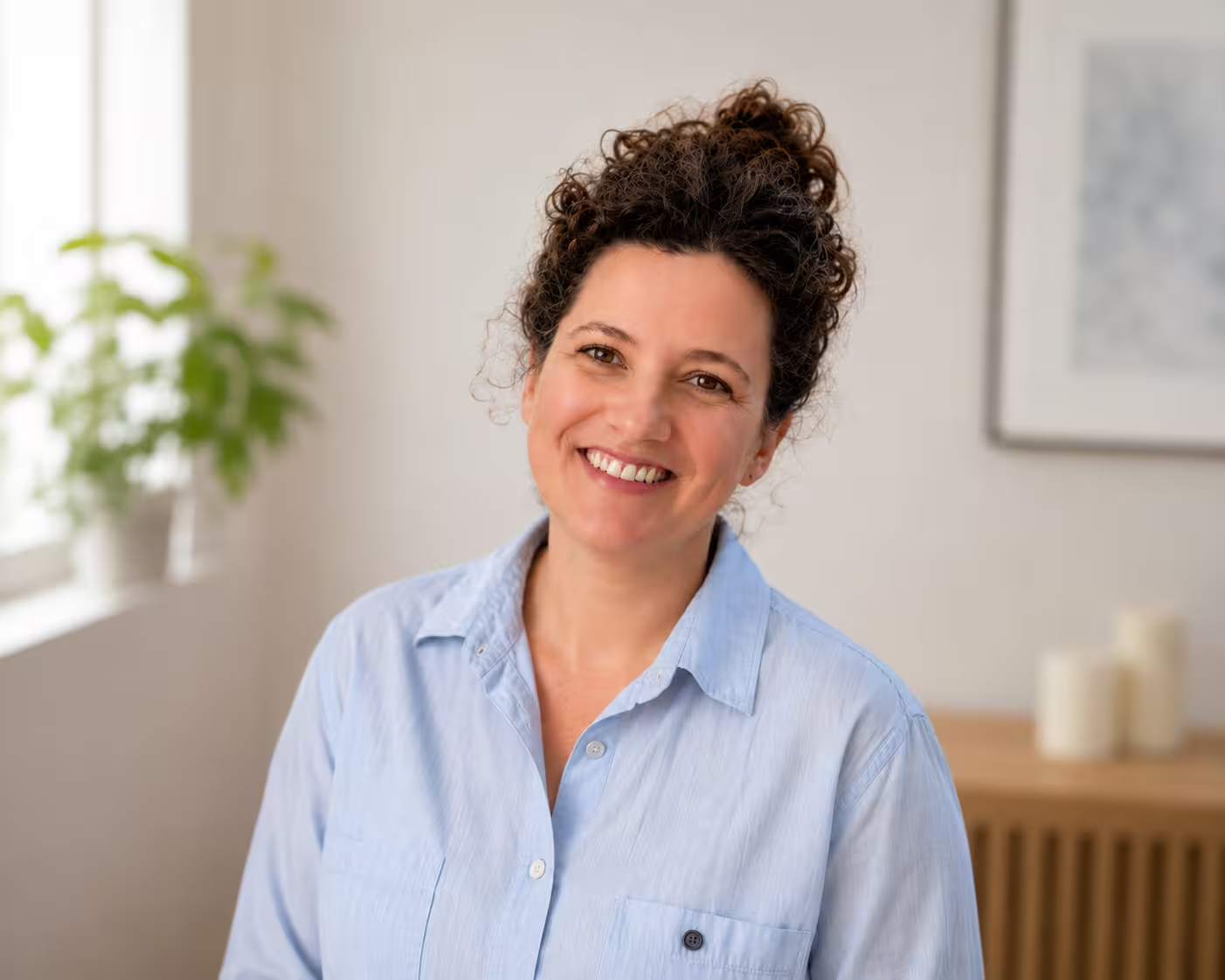
Louise Kelly
Registered Psychologist
AHPRA Registered
Louise's interest areas include eating disorders, anxiety, and evidence-based mental health care. She is committed to making psychological care accessible and compassionate.